 by
by England vs New Zealand. Lord’s Test. Final session, day five. The batter pushes a quick single to cover.
The fielder picks up cleanly and throws in one motion. Direct hit. Everyone freezes. The big screen shows the replay in slow motion.
The bat crosses the line, but is it grounded? The third umpire zooms in on the white line near the stumps.
The bat is still in the air when the bails fly off. Out by a whisker.
That white line just ended the innings. It’s called the popping crease, and it’s one of several markings that control every aspect of cricket.
But most fans who watch the game regularly still don’t know how many of these lines exist or what they actually do.
If you’ve ever been confused about the white markings on a cricket pitch, this guide clears it up.
How Many Creases Are There in Cricket?
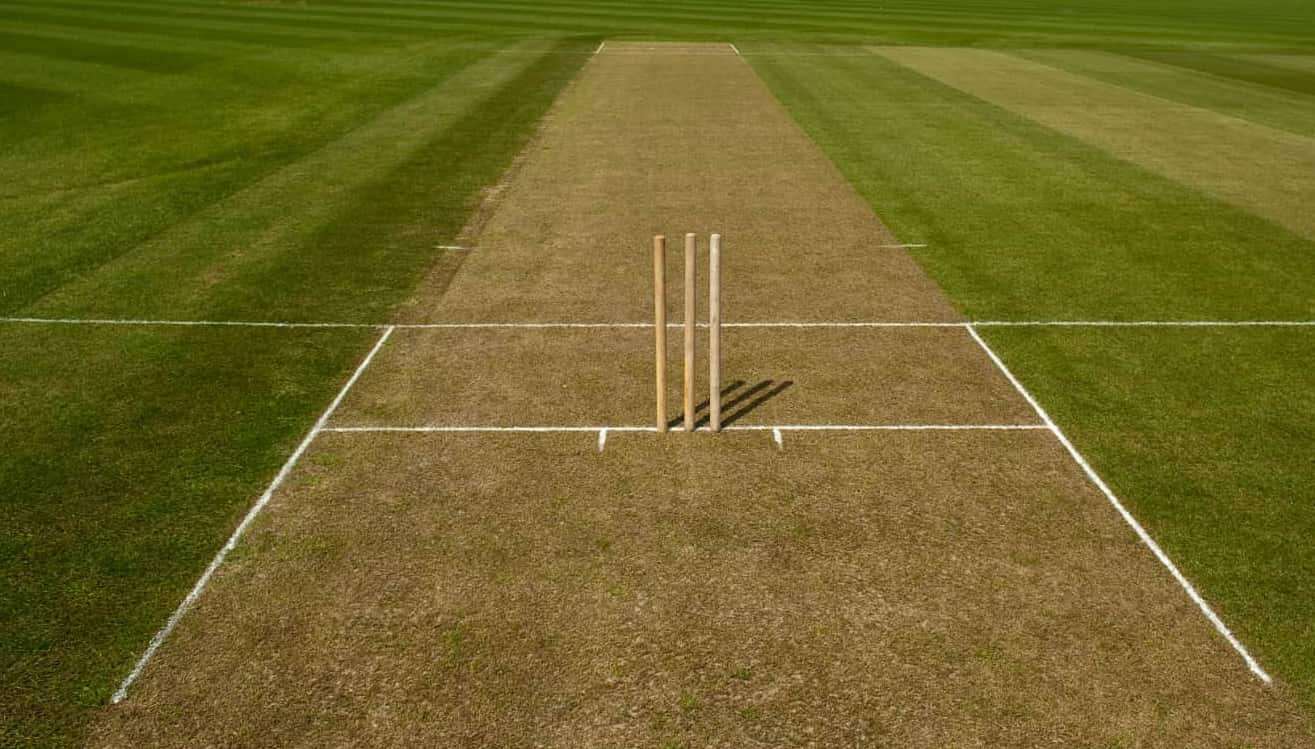
You’ll learn how many creases are there in cricket, what each one controls, and why they’re fundamental to every match.
Defining What a Crease Is in Cricket
A crease is a white line marked on the pitch. It creates boundaries that control player movement and gives umpires clear reference points for decisions.
For batters, these lines mark safety zones. Get your bat or body grounded behind the correct line, and you’re protected.
Step out without staying grounded, and you’re vulnerable to dismissal.
For bowlers, creases define legal delivery zones. Land your front foot beyond the line, and it’s a no-ball.
Position your back foot incorrectly, and the delivery is illegal.
Without these markings, cricket would be unplayable. Umpires couldn’t make consistent decisions.
Bowlers could deliver from anywhere. The game’s structure would fall apart.
These lines aren’t decorative. They’re the framework that makes cricket function.
Counting the Creases: How Many Lines Are on the Pitch?
There are eight creases on every standard cricket pitch.
This count applies universally. Whether you’re watching a Test at the SCG, an ODI at Edgbaston, or a T20 at Chinnaswamy Stadium, the number stays the same.
Format doesn’t change it. Country doesn’t matter. Every regulation pitch has exactly eight creases.
Here’s the breakdown:
- 2 Popping Creases (one at each end)
- 2 Bowling Creases (one at each end)
- 4 Return Creases (two at each end)
That’s three different line types, repeated at both ends of the 22-yard strip. Each type controls a specific part of the game.
The popping crease protects batters and monitors bowler legality. The bowling crease marks where stumps sit. The return creases control back-foot positioning for bowlers.
Whether it’s international cricket, domestic leagues, or the IPL, these eight lines are always present with identical measurements.
Breaking Down the Types of Creases in Cricket
Let’s examine each crease type. Understanding their functions makes watching cricket far more engaging.
Popping Crease: The Safety Line
The popping crease is the most critical line for batters.
It sits 4 feet (1.22 meters) in front of the stumps and runs parallel to the bowling crease. This line determines whether a batter survives or gets dismissed during run-outs and stumpings.
When a tight run-out goes to review, the third umpire checks one thing: was the batter’s bat or body grounded behind this line when the bails came off? Even half a centimeter decides the call.
Bowlers must also respect this line. If their front foot lands beyond it during delivery, the umpire signals a no-ball immediately.
The batting side gets an extra run. In limited-overs cricket, the next ball often becomes a free hit where dismissal is impossible except by run-out.
Remember the 2013 Champions Trophy? India vs Pakistan. Virat Kohli was run out backing up too far.
The replay showed his bat was millimeters short of the popping crease when Wahab Riaz’s throw hit. India collapsed from there. That line decided the match.
Bowling Crease
The bowling crease is where the stumps are positioned at both ends.
It measures 8 feet 8 inches (2.64 meters) in length and runs horizontally across the pitch. This line provides the foundation for both sets of stumps.
For bowlers, the front edge is crucial. Their front foot must land behind or on this line during delivery. Cross it, and the umpire calls a no-ball without hesitation.
Bowlers train relentlessly to maximize their stride without overstepping.
A longer delivery stride creates more momentum and potential pace. But one inch too far wastes the delivery and gives free runs.
During the 2003 World Cup final, Australia’s Andy Bichel bowled India’s Zaheer Khan with what looked like a perfect yorker.
But replays showed Bichel had marginally overstepped. The wicket was cancelled. India’s tail wagged longer than expected.
Return Crease: The Back-Foot Control Line
The return crease receives minimal attention but plays an essential role.
These vertical lines run on either side of the stumps. There are two at each end (four total). They extend perpendicular to the bowling crease.
A bowler’s back foot must land inside these boundaries during delivery. If the back foot touches or crosses the return crease, it’s a no-ball.
This rule prevents bowlers from delivering at extreme angles that would create unfair advantages.
Without return creases, a fast bowler could position themselves almost at square leg and bowl from there.
Umpires watch this on every delivery. It’s subtle, but in pressure matches, this detail can change outcomes.
Precise Crease Measurements and Layout
Here’s a complete breakdown of each crease type with exact specifications:
| Crease Type | Exact Measurement | Primary Role |
|---|---|---|
| Popping Crease | 4 feet from stumps, parallel line | Batter safety zone and bowler no-ball check |
| Bowling Crease | 8 feet 8 inches horizontal length | Stump placement base and front-foot marker |
| Return Crease | Vertical lines flanking stumps | Back-foot boundary for legal deliveries |
These measurements follow ICC standards globally.
The cricket crease length in feet remains identical across all formats and nations.
A pitch in Delhi has the same dimensions as one in Cape Town or Brisbane.
This standardization ensures consistency. Players know exactly what to expect wherever they play.
Do Crease Rules Differ Between T20, ODI, and Tests?
No. The answer to how many creases are there in cricket remains identical across all formats.
Many fans assume crease rules change between Tests, ODIs, and T20s. They don’t.
The eight creases maintain the same positions and measurements in every format.
What changes is the tactical approach, not the rules themselves.
- In Test Cricket:
Batters stay conservative around the crease. They rarely venture out unless facing spin bowling. The risk isn’t worth it when building innings over multiple sessions.
- In ODI Cricket:
Batters occasionally step out to spinners to disrupt their length. But they stay calculated. A careless dismissal can cost crucial momentum.
- In T20 Cricket:
Batters regularly charge down the pitch before the bowler releases. They leave the crease early to create hitting angles.
It’s aggressive, high-risk cricket. If the bowler adjusts or bowls wide, the keeper can stump them effortlessly.
The IPL produces countless crease-related dismissals every season. Rishabh Pant’s aggressive batting often takes him well outside the crease.
When it works, he hits massive sixes. When it doesn’t, he’s stumped by yards.
But the actual crease dimensions? Identical to Test cricket.
How many creases are there in cricket IPL matches? Still eight, following the same universal standards.
Understanding “At the Crease” in Cricket Language
This phrase appears constantly during commentary and cricket writing.
When someone says a batter is “at the crease,” it literally means they’re currently batting.
They’re positioned near the popping crease, facing deliveries.
But the phrase carries a deeper meaning beyond location.
A batter who is “well settled at the crease” has found rhythm. They’re reading deliveries cleanly.
They’re scoring without taking unnecessary risks. In Test cricket, this might mean batting seven hours without a false shot.
In T20 formats, being settled means controlling tempo while staying aggressive.
You’re punishing loose deliveries without throwing your wicket away recklessly.
The phrase captures both position and mental state. It reflects confidence, timing, and composure under pressure.
How Creases Shape Game-Changing Moments?
Creases aren’t passive markings. They actively decide match results.
For Batters:
- Staying behind the popping crease protects you from dismissals.
- Every millimeter counts when grounding your bat during singles.
- During stumpings, this line separates staying in from walking off.
For Bowlers:
- The front foot must stay behind the popping crease throughout delivery.
- The back foot must land inside the return crease boundaries.
- Violate either, and you hand over runs that can cost matches.
For Umpires:
- Creases provide reference points for judging every dismissal type.
- They determine run-outs, stumpings, and delivery legality.
- In tight calls, replays focus entirely on crease positioning.
One unforgettable moment: The 1992 World Cup semifinal between England and South Africa. Rain interruptions revised targets. But earlier, South Africa lost crucial wickets to tight run-outs. Derek Pringle’s direct hit from mid-off caught Peter Kirsten centimeters short of the popping crease. That dismissal changed the match momentum completely.
Expert Insight: Crease Discipline Separates Winners from Losers
Rahul Dravid once said that players who respect the crease last longer in international cricket than those who don’t.
He wasn’t talking about talent or technique. He meant awareness and mental discipline.
Elite batters know their exact position relative to the popping crease without looking down. They sense it through repetition.
When they dive during run-outs, their bat automatically extends behind the line.
Similarly, top-class bowlers land their front foot precisely on the edge consistently. They maximize delivery stride without overstepping.
This precision develops through thousands of practice deliveries.
In pressure situations, players lacking crease discipline make critical errors. A bowler oversteps when taking a match-winning wicket.
A batter assumes safety without grounding their bat properly. These mistakes decide championships.
The 2021 T20 World Cup saw multiple matches decided by centimeters at the crease.
Players who respected boundaries survived. Those who didn’t pay immediately.
Crease mastery isn’t flashy. It doesn’t make highlight packages. But it wins tournaments.
Common Errors Players Make Around the Crease
Even international professionals occasionally make crease-related mistakes.
- 1. Bat lifting during run-out situations
Batters slide their bat across, but don’t keep it grounded. If it lifts when the bails come off, they’re dismissed.
- 2. Overstepping while pushing for extra pace
Fast bowlers chase additional speed. They extend their stride. The front foot crosses by millimeters. The wicket doesn’t count.
- 3. Assuming safety without proper grounding
Batters dive desperately and assume they’re safe. But replays show their bat bounced at the crucial moment. Out.
- 4. Forgetting back-foot placement
Bowlers focus intensely on front-foot positioning and forget their back foot. It lands outside the return crease. No-ball.
These mistakes happen at every level, from club cricket to World Cup finals.
FAQs
- How many creases are there in cricket in India?
There are eight creases on every pitch in India, following the same ICC standards applied worldwide in all cricket-playing nations.
- What is the cricket crease length in feet for each type?
The popping crease sits 4 feet from the stumps, while the bowling crease measures 8 feet 8 inches in length horizontally.
- Do how many creases are there in cricket 2026 differ from previous years?
No. The number and specifications haven’t changed. Cricket has maintained the same eight-crease system for decades under ICC regulations.
- What happens when a bowler’s back foot crosses the return crease?
It’s called a no-ball. The delivery is illegal, and the batting team receives an extra run in addition to whatever they score.
- Can a batter be safe if their bat is resting on the crease line?
No. The bat must be grounded completely behind the line. Touching or resting on the line counts as being outside the safe zone.
Final Thoughts:
Understanding how many creases are there in cricket transforms how you experience the game.
These eight lines govern precision, fairness, and decision-making at every level.
Next time you watch a match, pay attention to these markings.
Notice how batters ground their bats during tight singles.
Watch bowlers’ foot placement during delivery.
These details matter more than casual viewers realize.
Cricket isn’t just about powerful hitting and hostile bowling.
It’s equally about discipline, awareness, and respecting boundaries.
The creases represent that precision perfectly.
Also Check:


